RESEARCH STRANDS
1.
ARCHITECTURAL AND URBAN PLANNING HOUSING STANDARDS AND THEIR ORIGINS
In socialist Yugoslavia, urban planners, architects and construction companies carried out the tasks of mass urbanization and housing construction set by political-economic and housing reforms. The first research objective is therefore to examine how these actors planned, designed and realized housing estates, residential buildings and housing units, relying on contemporary and/or inherited design and planning practices.
The role of architects and urban planners is considered on two levels: (1) the planning and design, and (2) the realization of standards for the housing unit and the housing estate. The research is based on a sample of selected housing estates from all six republics for each reform period. The housing estate is examined in a broader urban and regional context, through the relationship between housing and other monofunctional zones, which points to specific aspects of the housing standard (for example, environmental pollution caused by the proximity of work zones and industrial plants).
The development of housing unit standards is explored in relation to given material and technological conditions. An analysis of the activities of construction companies specializing in housing construction identifies the problems generated by reforms and the ways in which they adapted, focusing on changes in work organization and technology. Particular attention is devoted to dominant but insufficiently researched semi-prefabricated construction systems. The research on housing unit standards will result in a catalogue of selected examples.
2.
INVOLVING SELF-MANAGING CITIZENS IN HOUSING PRODUCTION
The second research strand addresses the transformation of the actions, position and broader role of Yugoslav citizens during the socialist period – from passive recipients of decisions to active participants in shaping everyday living space. It departs from the premise that citizen participation in socialist society was a two-way process between the authorities and citizens, in which architects and urban planners also took part, directly or indirectly.
The research on housing culture focuses on the ways in which desirable models of the contemporary housing standard were represented and disseminated at the level of housing units and estates, as well as on the techniques of subtle persuasion by which the authorities and the professions encouraged citizens to adopt these models.
Within this strand, two of the most successful models of citizen participation are analysed in detail. The first is the organization and activities of housing cooperatives – a model inherited from the interwar period, which in the post-war decades was further developed and expanded thanks to continuous support from the state and municipalities. The second is the model of socially oriented housing construction (DUSI), aimed at strengthening cooperation among all actors in housing production with the goal of improving housing quality and user satisfaction. Their mechanisms and effects are explored with particular emphasis on the role of the architect in direct work with end users – residents of apartments, single-family houses and residential buildings.
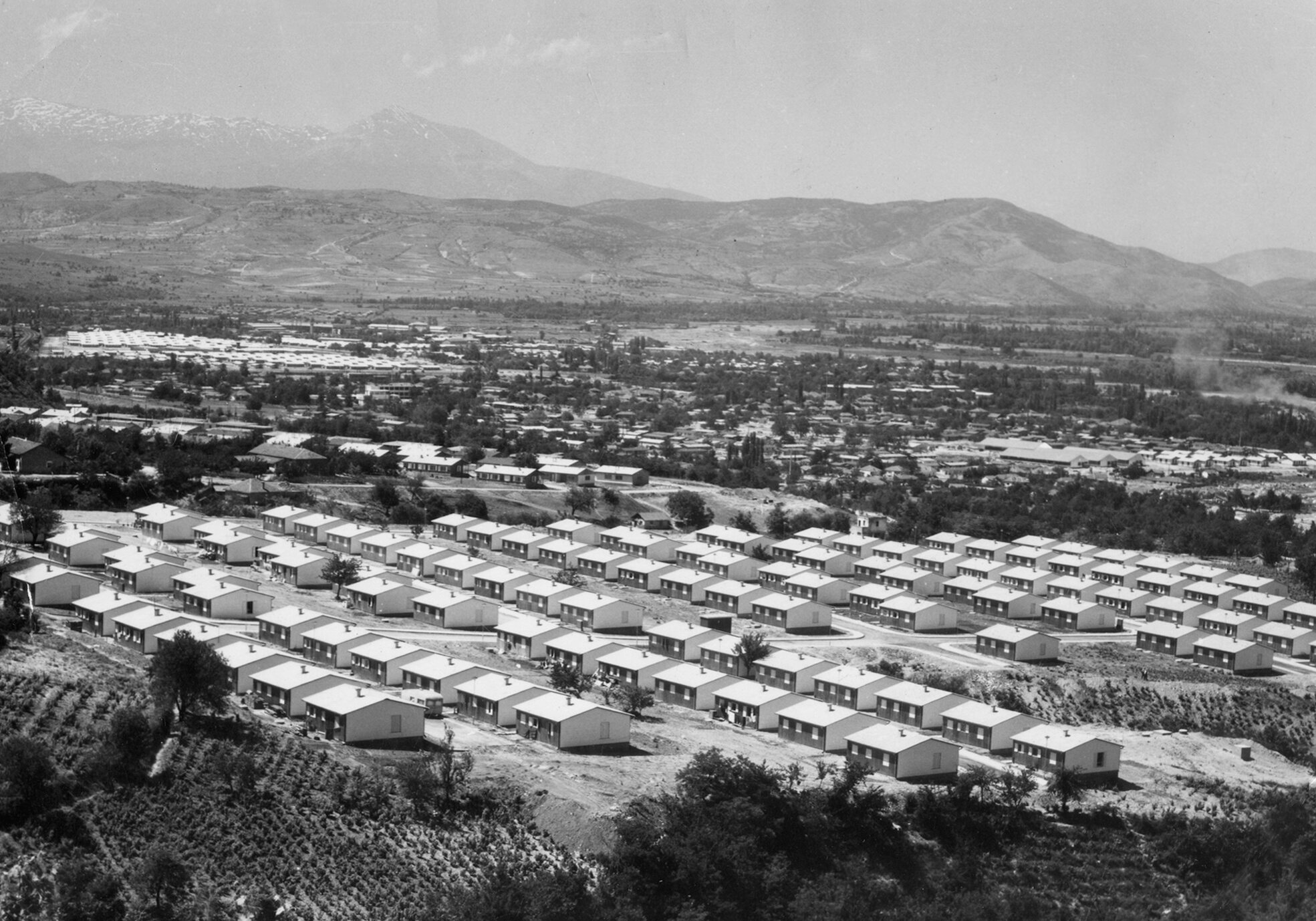
The project also examines how citizens exercised their right to housing through direct action, primarily through (un)planned individual construction, and how professionals and authorities sought to regulate it. The professional community attempted to keep this type of construction under at least partial control by developing standard designs, temporary prefabricated solutions and organizing the rehabilitation of areas of illegal construction, whereby individual prefabricated dwellings were incorporated into development plans. This type of production of everyday living space was introduced into the central professional and political discourse in the early 1960s (triggered by the urgent response to the 1963 Skopje earthquake) and was considered in the context of emergency housing in natural disasters and potential wartime destruction.
3.
HOUSING AND POLITICAL-ECONOMIC REFORMS
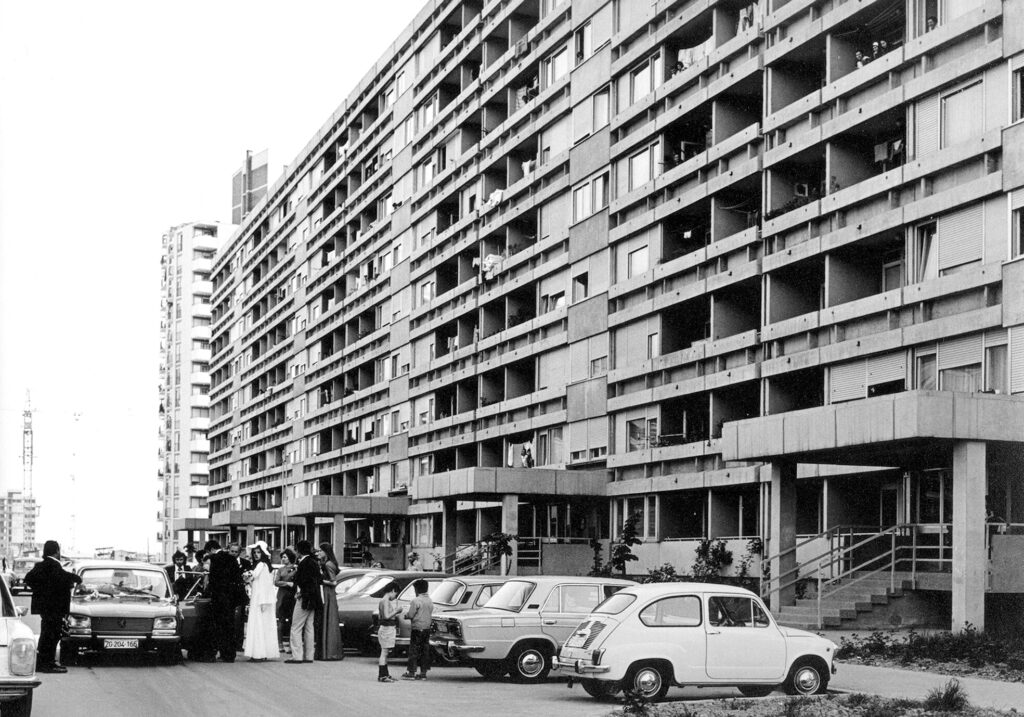
The third research strand focuses on housing reforms, situated within the broader context of the political-economic reforms of socialist Yugoslavia. From the 1950s onwards, Yugoslavia implemented three general political-economic reforms, accompanied by housing reforms aimed at modernizing the country and raising living standards, which necessarily included mass housing construction. Social housing construction underwent several phases: from an early period marked by the dominance of housing funds and strongly centralized management, through the gradual strengthening of market mechanisms from the mid-1960s onwards, to the introduction of the socially oriented housing construction system (DUSI) after the political and constitutional changes of the 1970s.
The research on Yugoslav housing policies identifies their administrative, financial, institutional and legislative framework at the level of the federation, republics and municipalities, as well as the interrelations between political-economic and housing policies and between domestic and foreign policy. Special emphasis is placed on the actors of the reforms – authorities, producers and citizens – and on how frequent political, economic and social reforms reshaped legislative and institutional frameworks, introduced new models of managing housing policy, local self-government and urban planning, and opened up space for various forms of involvement of professionals and the public.
To better understand the dialogue between the state and the professional community in decision-making on communal issues and housing, the project pays particular attention to the activities of the Standing Conference of Cities and Municipalities of Yugoslavia (SKGOJ) as the main federal platform for communication between the authorities, local self-government and professional organizations. SKGOJ, established in 1953 in Belgrade as a voluntary association of cities and municipalities, gradually brought together urban centres across Yugoslavia and acted as a forum for articulating local interests, exchanging experiences and shaping common positions. In addition to its regular activities, the project examines its publishing programme (including the journal Komuna), the organization of expert consultations and conferences, and the development of networks of international cooperation.
For the quality of citizens’ everyday lives, the key level of implementation of housing reforms was the level of the housing estate, that is, the local community as the smallest social and territorial unit in which social self-management was brought down to the lowest and most direct level of decision-making. The project explores the history of its everyday functioning, residents’ relationship to the housing community, and the legal and social construction of the local community as an instrument for implementing housing policies. Within the history of everyday life in housing estates, the mechanisms of micro self-management at the level of individual building councils are analysed. In order to adequately evaluate the modernizing leap of socialist Yugoslav housing policy, the research also covers the interwar period: housing, urban planning legislation, the activities of housing cooperatives and the work of the Association of Cities of the Kingdom of Yugoslavia (1927–1941), the predecessor of SKGOJ.
4.
ARCHITECTURAL AND URBAN PLANNING DISCOURSE ON HOUSING – BETWEEN EAST AND WEST
The fourth research strand builds on the previous three and focuses on the architectural and urban planning discourse on housing estates and housing units. This discourse is located in the intermediary space between, on the one hand, the tasks defined by social and housing reforms, the professional position of architects and urban planners in society, the organization of professional work and material conditions, and, on the other, the realized housing stock. In this way, the scope and boundaries of the influence of other actors in the housing construction process are examined.
The primary voice in shaping housing estates, housing units and the urban planning discourse was that of the republican societies and federal associations of urban planners (USJ) and architects (SAJ), as well as leading professional authorities. SAJ discursively shaped the field of housing under the visible influence of international professional organizations, primarily the International Union of Architects (UIA), the International Federation for Housing and Planning (IFHP), CIAM and the Housing Committee of the UN Economic Commission for Europe. In this period, urban planning was the key discipline for implementing state development plans, while architecture gradually shifted from the field of construction to the field of cultural production.
Starting from these premises, the fourth research strand synthesizes all identified inherited and contemporary – direct and indirect – international exchanges of knowledge among actors involved in housing construction in socialist Yugoslavia. Its aim is to valorise the authenticity of the Yugoslav model of housing construction and its contribution to the pan-European post-war project Homes for All People.